Project MPG: Can We Make Pack Mule Go Farther?
By Tom Neal
Bigfoot Trails Basecamp | Independent Adventure Media
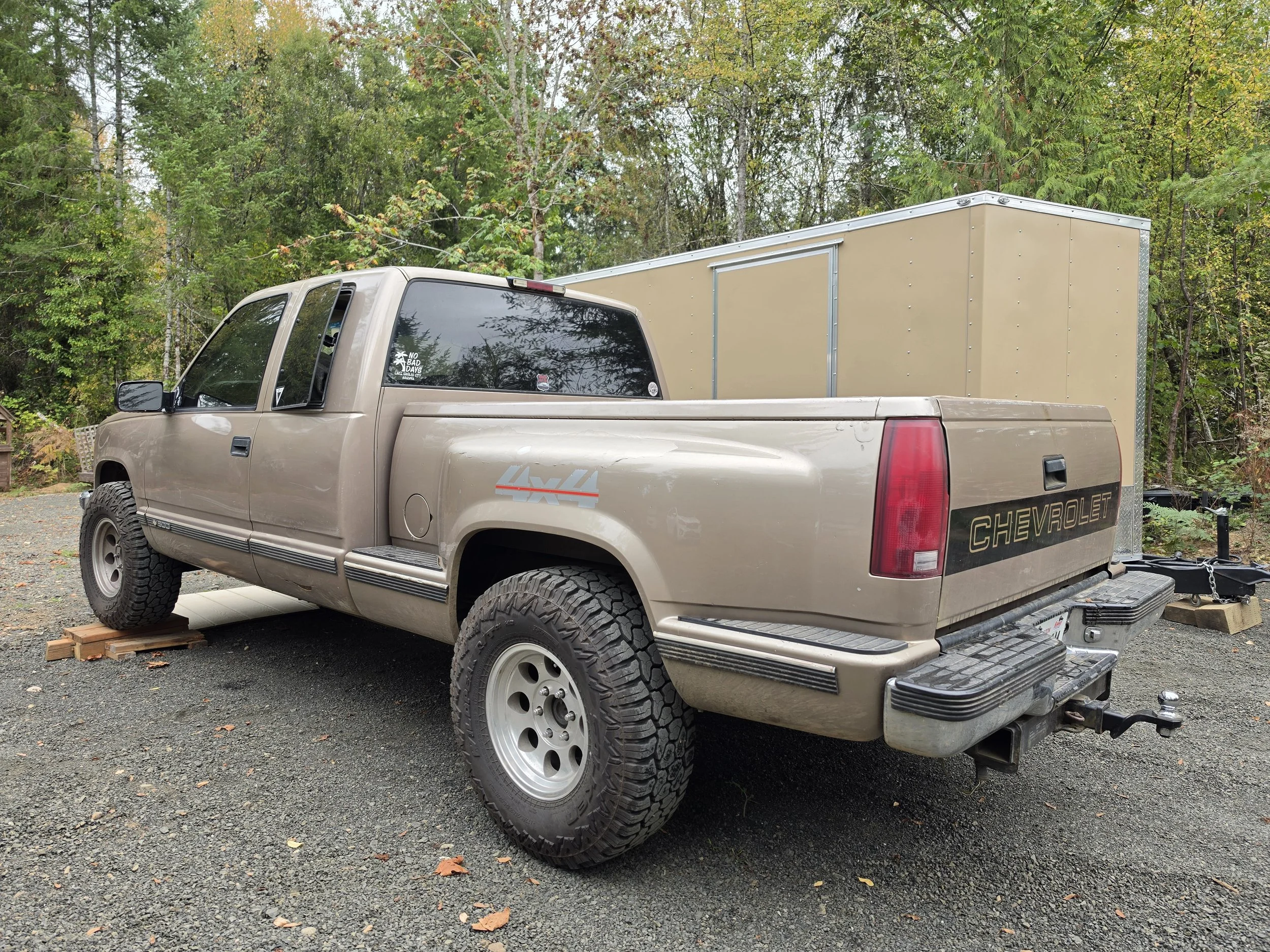
Pack Mule has a problem. She is one thirsty pig! She drinks gas. Not a little, either.
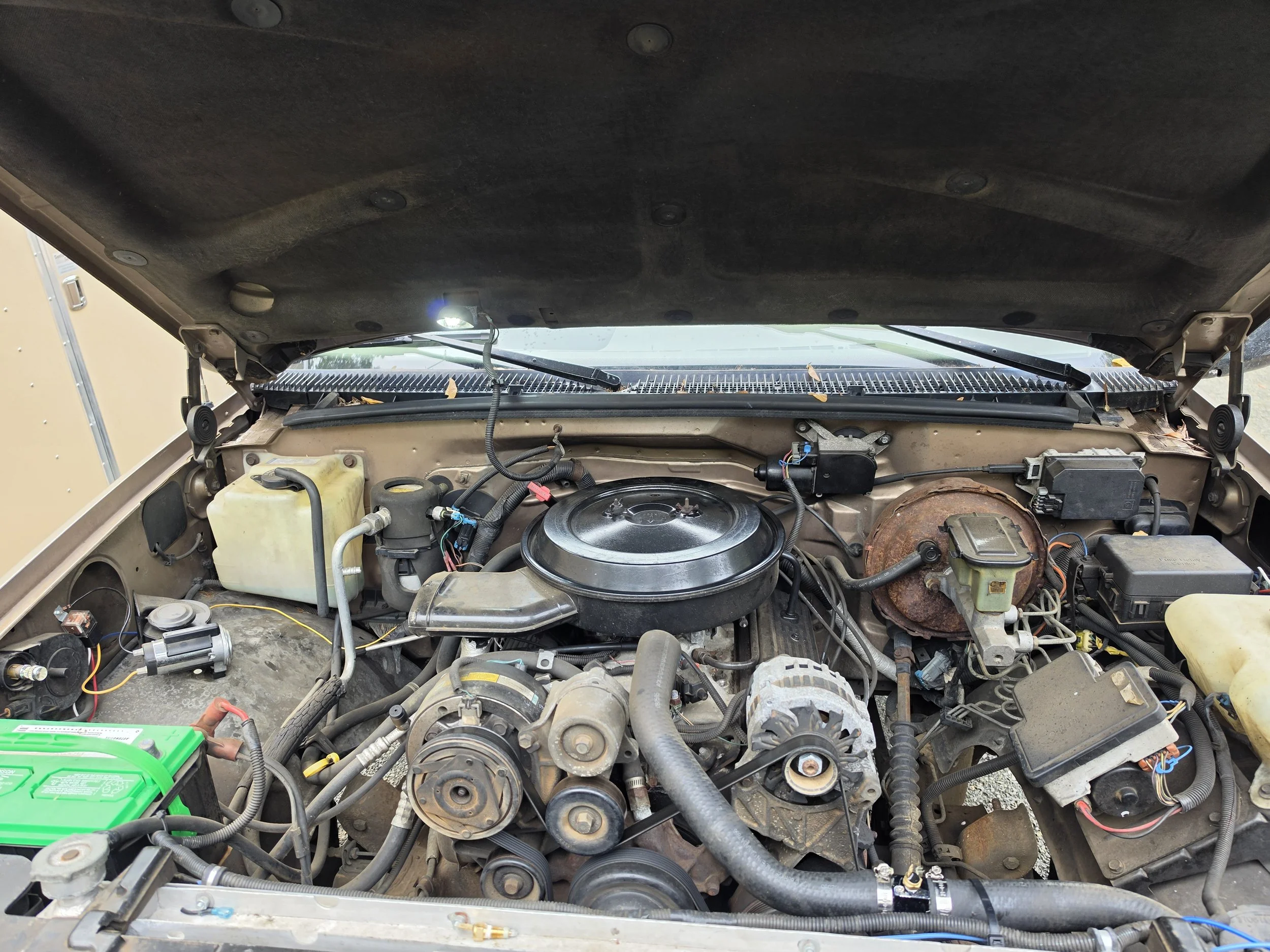
Our 1995 Chevrolet K1500 4x4 has the 5.7-liter TBI V8, a 4L60E automatic, four-wheel drive, 285 tires and all the other stuff that makes an old truck an old truck. Right now, we're seeing roughly 11–12 mpg. That's not exactly what I'd call efficient.
And with fuel prices doing what fuel prices do, it seems like a pretty good time to find out whether we can do something about it.
Not by turning Pack Mule into a science project that never leaves the garage. Not by bolting on every shiny performance or “fuel-saving” part we can find. And definitely not by turning it into something it was never meant to be.
We're going to use the truck. That's the whole point.
So What Is Project MPG?
Project MPG is our attempt to make Pack Mule work smarter and use less fuel while keeping the truck useful for what we actually do with it.
Pack Mule is a working truck around Bigfoot Trails Basecamp. It hauls materials, supports property projects and gets used for all the mundane stuff an old pickup is supposed to do.
But it also gets out. We take it on road trips, backroads and off-road adventures. It gets loaded. It gets driven. It gets used for towing when necessary.
Pack Mule doesn't sit in the driveway while we tell people how capable it is. We actually use it.
That makes this a little more interesting than simply bolting parts onto a truck and taking it around the block. We want to know what happens when those parts have to live in the real world.
The Goal
The target is 20+ mpg!
That's a goal, not a promise. If we get there, that's awesome, but honestly, we'd be happy to see 18 mpg.
If we get halfway there, that's still useful information. And if we spend money on something that makes absolutely no meaningful difference? We'll say that, too.
The goal isn't to manufacture a success story. The goal is to find out what actually works.
How We're Going To Do It
We're starting with a baseline.
Before changing anything, we'll establish what Pack Mule actually gets under normal conditions. That means multiple tanks of fuel rather than one convenient mileage number.
We'll record fuel used, mileage and the conditions surrounding the test whenever practical. Then we'll start making changes.
The idea is to change one major variable at a time whenever we reasonably can, put some miles on the truck, and see what happens.
Some of the areas we're looking at include engine and fuel-system maintenance, TBI airflow, air filtration, the factory Y-pipe and exhaust system, fuel-system condition, tire pressure and rolling resistance, alignment and other mechanical variables, driving conditions and load, and anything else that makes sense as the project develops.
We're not assuming that every modification will improve fuel economy. That's important.
A part can make an engine sound better without improving mileage. It can improve throttle response without saving fuel. It can make the truck more enjoyable to drive while doing absolutely nothing at the pump.
Those are all legitimate results. We'll track them.
All the while, we do carry gear in the truck at all times, so the gear stays. We are not emptying the truck of every ounce of weight just to chase a better number. We're doing this while keeping Pack Mule in work-truck status.
The Exhaust Question
One of the first major areas we're going after is the exhaust.
The factory TBI exhaust configuration—and particularly the Y-pipe—is an obvious place to investigate on a 30-year-old truck.
But there's another problem. A lot of aftermarket GMT400 exhaust systems are listed for later Vortec trucks, while Pack Mule is a 1995 TBI truck.
So we're not interested in simply finding a part that looks like it ought to fit and calling it good. We want to know what actually fits.
If a system requires modifications, we'll document them. If it bolts right in, we'll document that. And then we'll drive the truck and see what changed.
This Isn't Just About MPG
Fuel economy is the number we're chasing, but it isn't the only thing that matters. Pack Mule still has to be Pack Mule.
We care about fuel economy, throttle response, driveability, sound, towing behavior, reliability and cost.
And ultimately:
Was it worth doing?
There's no point gaining another mile per gallon if the truck becomes a miserable bastard to drive. Likewise, if a modification makes the truck noticeably better to drive but doesn't move the MPG needle, that's worth knowing.
The Bigger Test
The really interesting part comes later.
We're working toward Road to SEMA 2027.
Before that trip, we want Project MPG to have done its primary testing. We'll establish the baseline, work through the modifications, test the results and settle on the final configuration before Pack Mule leaves Washington.
Then the truck gets its biggest real-world test yet.
Road to SEMA 2027 will take Pack Mule from Washington toward Las Vegas, using paved roads, backroads and off-road routes along the way.
Different roads. Different terrain. Different elevations. Different weather. Different loads.
A lot of miles.
By then, the question won't simply be whether Pack Mule can achieve a good number on a carefully controlled tank of fuel. We'll find out how the finished truck actually lives with the changes.
We're Keeping The Receipts
There's another reason we're doing this differently. We're going to document the process.
Photos. Mileage. Fuel. Parts. Costs. Changes. Failures. Successes. And the stuff that doesn't work.
Because there's plenty of information on the internet telling you what you should do to an old truck. There isn't nearly as much showing what happens when you actually do it, put thousands of miles on the truck and keep using it for the things you bought the damn truck to do.
That's what we're interested in.
Not a perfect build. Not a dyno queen. Not a show truck.
A useful old truck that gets better at its job.
So Here We Go
Project MPG starts with a 30-year-old Chevy, a gas gauge that gets a little too much attention and a simple question:
How much farther can we make Pack Mule go on a tank of fuel?
We'll find out.
And if we learn something along the way that saves somebody else a few bucks at the pump—or keeps them from buying a modification that doesn't actually help—that's even better.
This is Project MPG.
Let's see what this old truck can do.
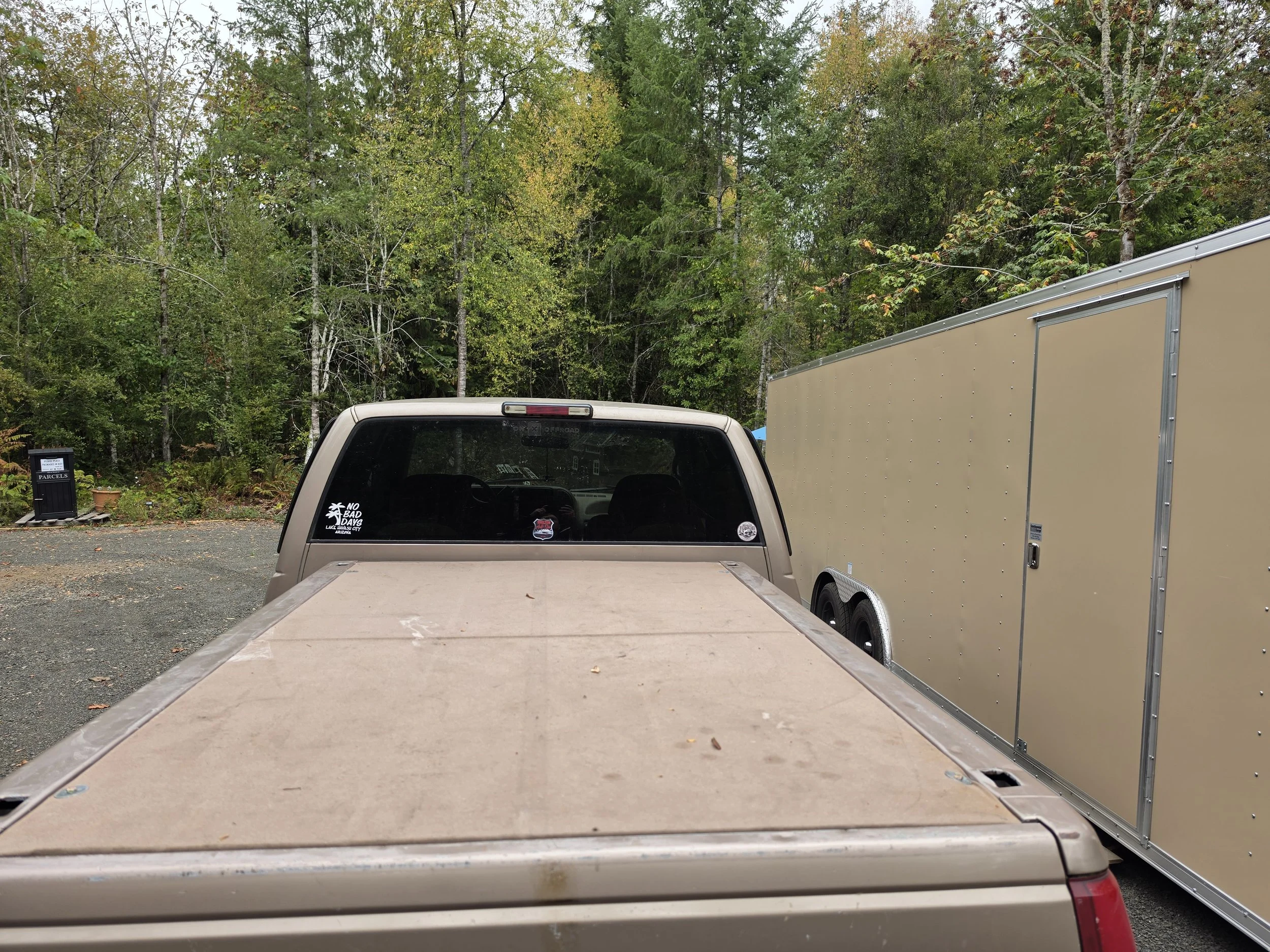
Tonneau Cover Installed