
Camco vs. Rhino RV Sewer Hoses – Real-World Use Review
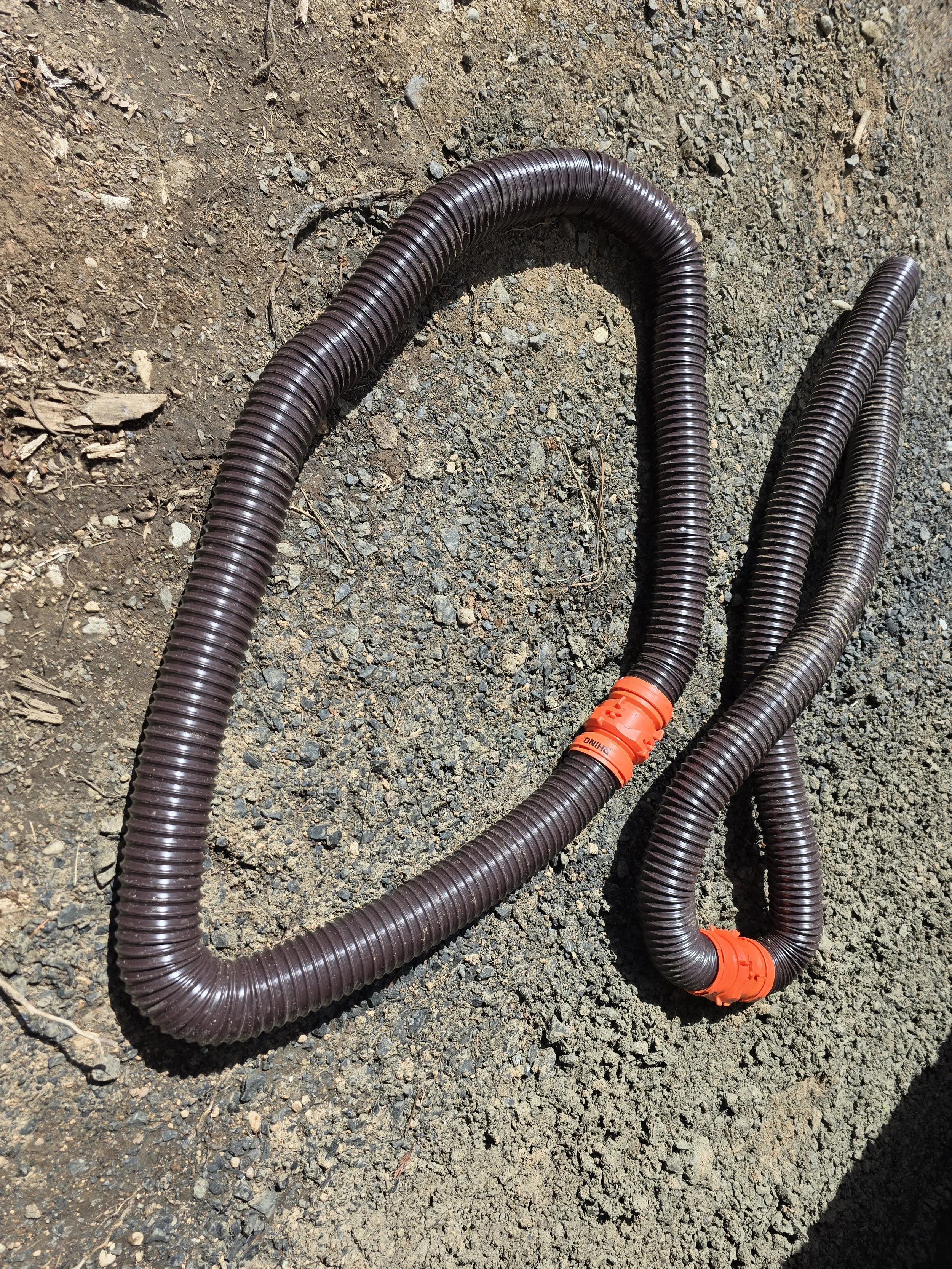
I’ve run both Camco and Rhino sewer hose systems in real-world RV use, and both have earned their place in the toolbox. This isn’t a “one is good, one is bad” comparison—more of a field-use breakdown based on how they actually perform when you’re living with them day to day.
My original setup has been a pair of Camco hoses that are probably 8+ years old (maybe older). They’ve been solid workhorses. The only real limitation I ran into recently was simple reach—I came up about a foot short of a dump connection using just those two sections.
To solve that, I picked up a Rhino hose kit from Walmart/Tractor Supply (about a year ago). It’s a different style—more of a collapsible “scrunch” design—and it absolutely gets the job done. No complaints on function. It works, plain and simple.
Over time, I’ve found myself alternating between the two systems depending on the situation.
I tend to reach for the Camco setup first because I prefer how the hoses coil and store. They feel more structured when packing up, and the fittings—being well broken-in—make hookup and disconnect easier. That’s not a design flaw, just wear from years of use that’s actually worked in my favor.
The Rhino system has its own strengths. When fully extended, it performs very well, especially on a straight run. The main difference I notice is that initial expansion force when opening the valve—it wants to push itself outward more aggressively. Not a dealbreaker, just something you learn to manage depending on how you’ve got it set up.
The reality is, most of my setups require two hose sections anyway, so I’m rarely running a single straight line.
One issue did recently show up on the Camco side: I developed a leak near the fitting end. Thankfully I caught it quickly, but under initial discharge pressure it will spray from a split right at that connection. That effectively put that hose out of rotation for now.
Because of that, I’ll likely be relying more on the Rhino setup for the time being while I repair or replace the Camco line.
The important takeaway for me is this: both systems have been fully tested in real use, not storage. Both have performed exactly as designed under actual RV conditions—frequent hookups, breakdowns, repositioning, and full tank cycles.
Camco has been my long-term preference for storage and day-to-day handling. Rhino has proven itself as a strong, dependable backup and extension system. If you notice the picture in the Journal page, I an running the old Camco hone with the new Camco flush valve (prefer over the Flush King - failure after 3rd use), but the Rhino dump elbow. I like the clear elbow of the Rhino, my Camco kit has the grey and yellow elbow.
At the end of the day, it’s less about “which brand wins” and more about having the right combination of tools that keeps you operational when you’re living mobile.
I’d be interested to see what Camco—and even Rhino—might be working on for next-gen fittings or hybrid systems that combine the best of both approaches.
Because out here, it’s not theory—it’s use case.