
Bigfoot Trails Basecamp Driveway Build — 1,000 Feet In
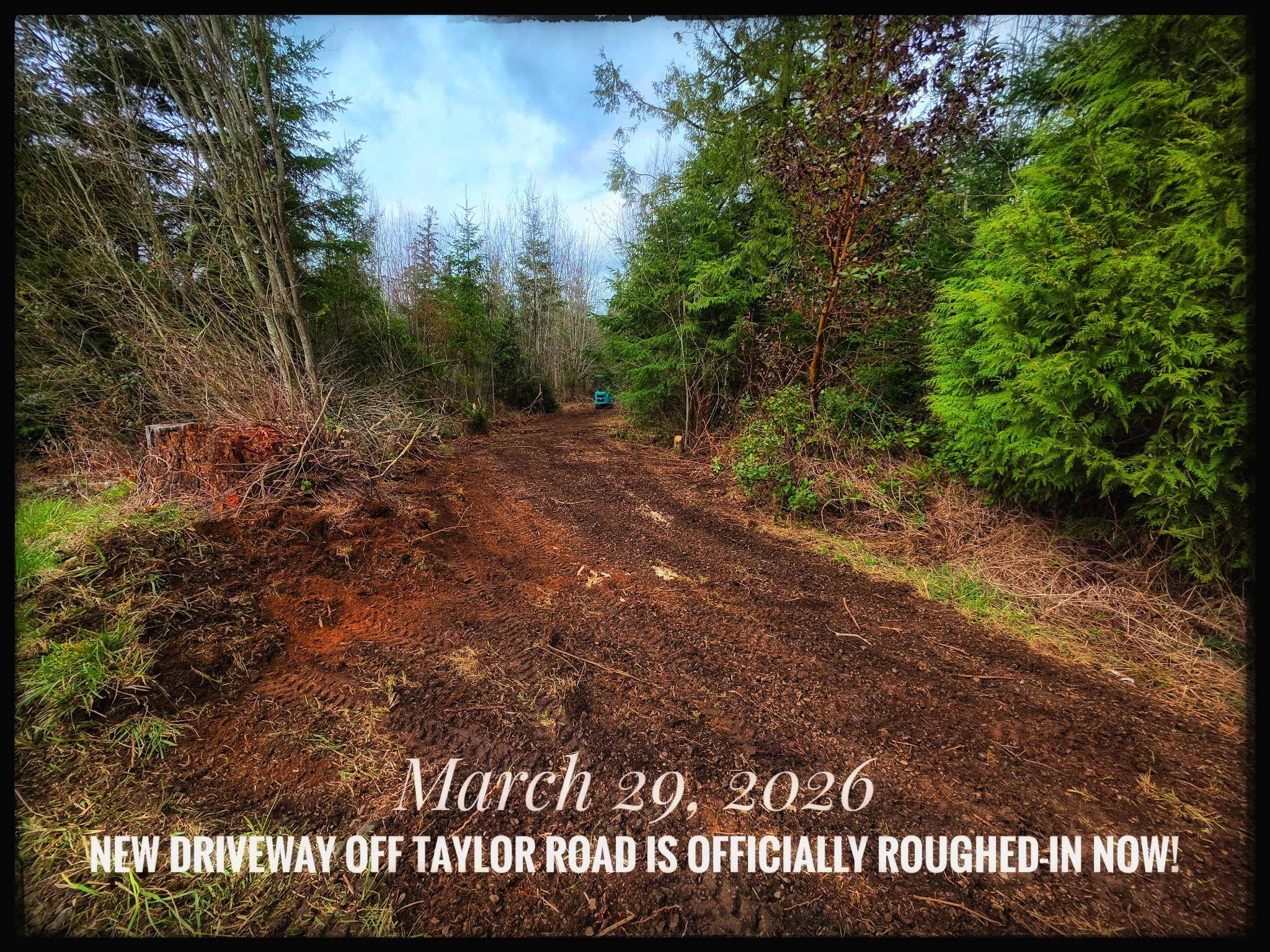
Bigfoot Trails Basecamp Driveway Build — 1,000 Feet In
Cutting in a 1,000-foot driveway by hand with a small AGT H15R gas mini excavator has been slow, physical work. Clearing trees, pulling stumps, rough grading, and pushing brush off to the sides—nothing about it is fast. But it’s getting done, one bucket at a time.
That little machine has earned its place out here.
It’s been nicknamed the “Chinese Shovel.”
Partly because that’s exactly what it is—a hydraulic, motorized shovel built overseas. But mostly because it reminds me of an old Harley Shovelhead: rough, loud, beats you up, and demands constant wrench time. Bolts back out. Red Loctite helps, but not enough. Every day ends with a wrench in hand.
Still worth it.
For $5,000, it’s already paid for itself several times over. Even with breakdowns, it beats renting equipment or tearing up your body doing it by hand. It’s not pretty, but it works—and that’s what matters out here.
First Pass — Getting a Line Through
Once the driveway was punched most of the way through, I took the truck down it for a first pass. It was rough, narrow in spots, and showed every mistake immediately.
That run told me exactly where I needed more width and cleanup.
So I went back in with the excavator and opened those sections up.
Next test was my wife in her Kia Sorento, right after a rain. That’s when the clay made itself known. Slick, greasy, no traction—like driving on ice. Good reminder that dirt work isn’t done just because you can get through it once.
Bringing in Equipment — Real Progress
The turning point came when my son brought real equipment into the mix.
He got a skid steer out here and spent a couple hours running the length of the driveway—cutting high spots, knocking down ridges, and smoothing the path. That alone made a massive difference.
A few days later, he stepped it up again and brought in a dump truck.
Load after load, we put down over 105,000 pounds of gravel. Base rock first, then smalls material (4-6 inch rock) in the worst sections where the clay turns into soup.
It’s not finished yet.
There are still low spots to fill, smalls to rake into tire tracks, and more rock to spread. But now we’re past the point of “just getting through it” and into building something that will actually hold up.
Next Step — Full Access
Next move is simple:
Finish spreading smalls into the soft sections
Run the Jeep through for another test
Add more gravel where needed
If everything holds, the goal is to have the motorhome and car trailer rolling down this driveway by the weekend.
That’s the milestone.
Not perfection—access.
Watch the First Runs
The first truck run is raw—no commentary, just real conditions.
The second run, with my wife in the Sorento, gives a better feel for what that clay does when it’s wet.
It’s not finished.
But it’s real progress.
And out here, that’s what counts.