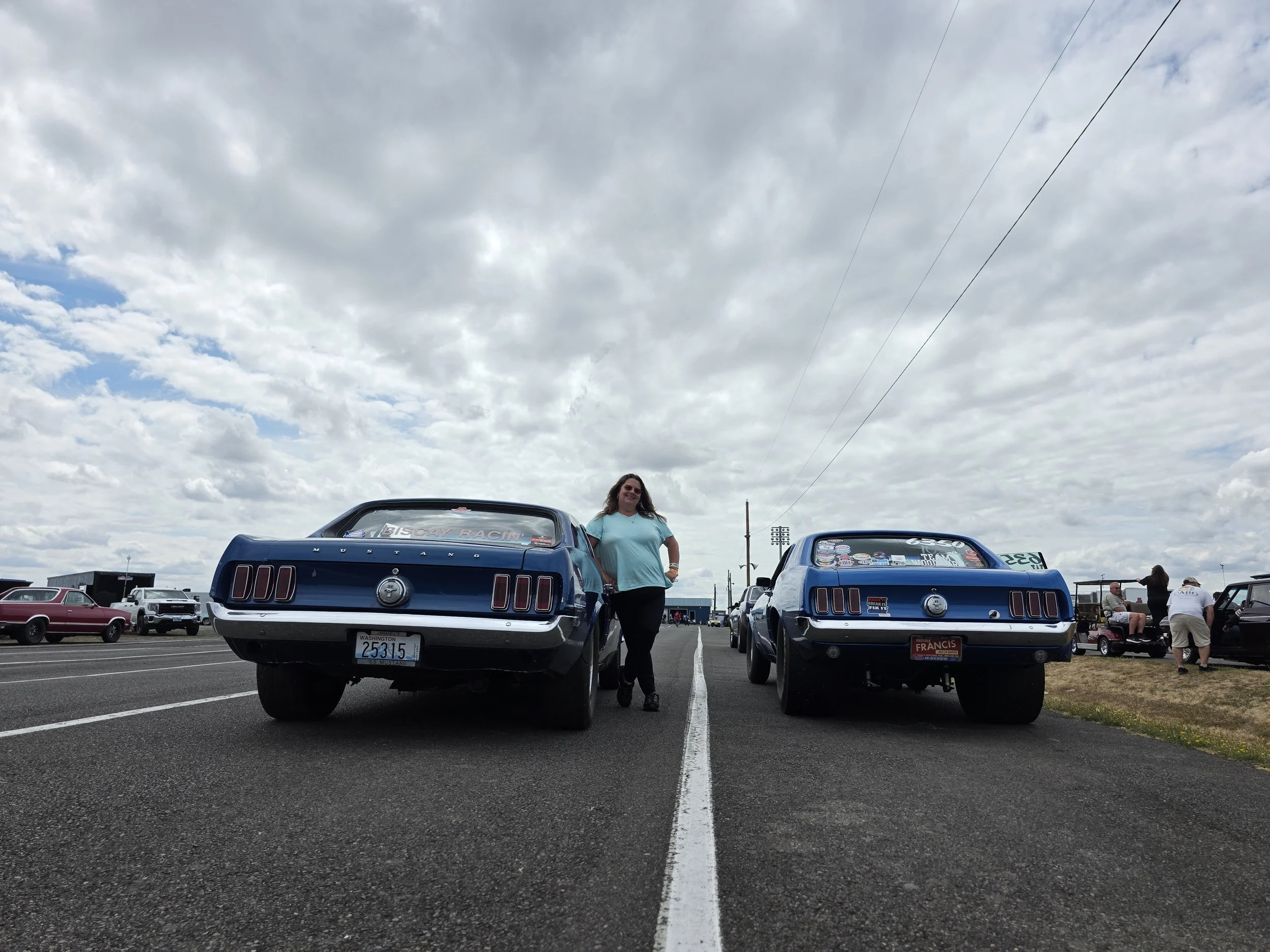
Resurrecting a 1969 Mustang: A Return to Bracket Racing After 15 Years
Bracket racing isn't forgiving, especially when the car has been sitting idle for a decade and a half.
In March 2025, Jahanel made the call to return to the dragstrip after a 15-year absence from competition. The catalyst was a narrow, unmissable window: the opportunity to share the staging lanes with her dad, who has been actively drag racing since the late 1960s.
That set the clock ticking. We had two weeks to prep the car, a zero-dollar budget for racing upgrades, and a 3-hour one-way haul to the track with no tow rig. It was going to be a reactive, priority-based thrash just to make it to the water box.
The Weapon: 1969 Ford Mustang
This isn't a new build; it’s a car with deep family roots. Originally restored from a bare shell in the late 1980s, the Mustang was incrementally developed over decades before its long hibernation.
The Baseline Specs:
Powerplant: 351W V8 (converted from the original 250ci inline-six)
Rear Axle: 9-inch Ford
Front End: Granada spindles with front disc brakes
Ignition: Ford Duraspark
Because the car hadn't seen the track since the early 2010s, a full preventative teardown wasn't possible within our 14-day window. We woke it up, fixed what was obviously broken, and went racing.
The Reality Check: 2025 Season Failure Log
Extended dormancy combined with the aggressive environment of bracket racing guarantees one thing: systemic component attrition. The track accelerates the exposure of deferred maintenance.
During the first half of the season, we spent more time in the pits actively troubleshooting than optimizing dial-ins.
30-year-old Edelbrock carburetor failed; electric pump died; aged fuel lines ruptured.
Sequential alternator, starter and distributor failures.
Catastrophic transmission failure mid-season.
Inconsistent throttle response requiring constant, reactive tuning.
To handle the constant repairs and the brutal logistics of 6-hour round trips, we expanded our footprint. We picked up a motorhome to serve as a tow vehicle and pit basecamp, transitioning from a borrowed open trailer to a 24-foot enclosed setup. It solved transport issues but added massive complexity and crew fatigue to the weekends.
The Payoff and 2026 Focus
From a pure mechanical standpoint, the Mustang was unreliable. But drag racing is won by the driver, and the primary goal of the season was getting Jahanel vital seat time.
Despite late-night repairs, blown transmissions, and the exhaustion of thrashing in the pits, she stayed in the seat. Her persistence, repeated testing, and ability to adapt to imperfect equipment paid off with an invitation to the ET Finals in Mission, British Columbia.
The Takeaway: Seat time can offset a mechanical disadvantage, but only up to a point. Bracket racing demands consistency, and you can't be consistent when you're fighting the car.
The 2025 season was a costly, complex shakedown run that successfully got a veteran racer back in the game. For 2026, the focus is strictly mechanical: reduce the failure points, eliminate the variables, and lock in the consistency.
Track the 2026 season with us and watch how we get this '69 Mustang dialed in for the win light.